


Master One Light Portrait Workflow: Outdoor, Studio & Night
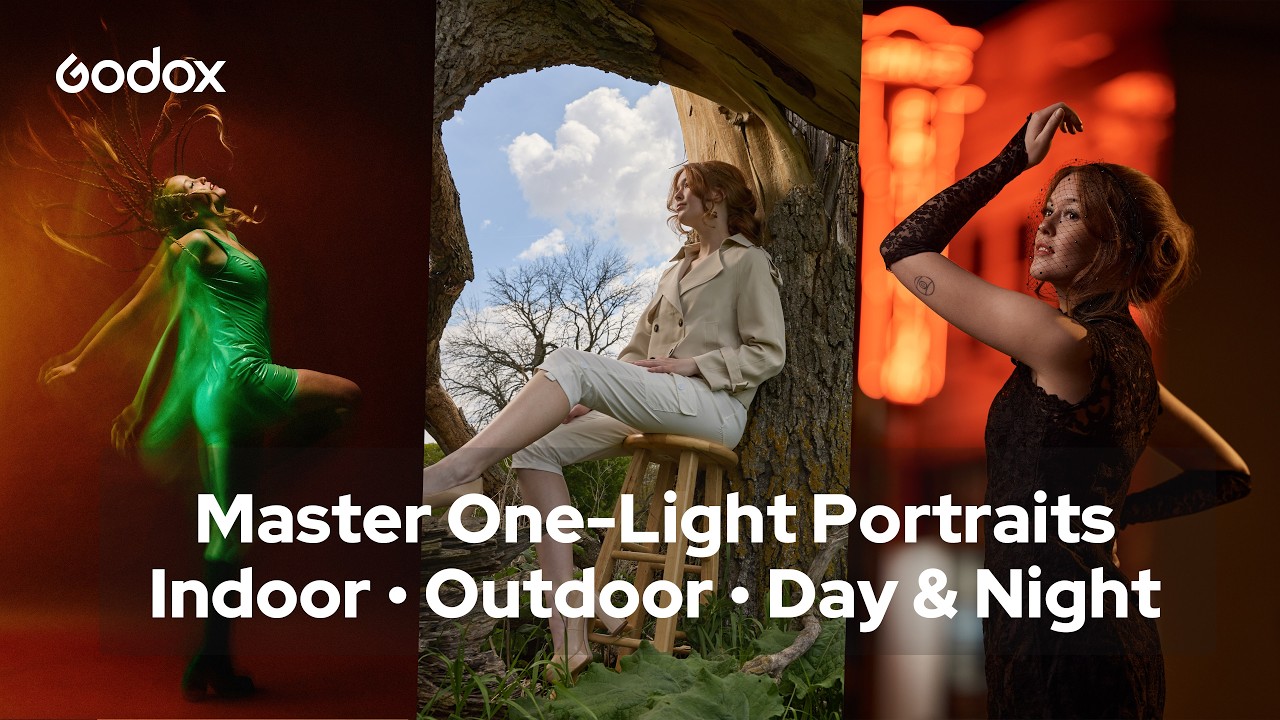
Every decision on a portrait assignment defines how we dignify our subject. While sticking to a single style might feel safe, humans are complex and deserve a lighting setup that reveals their depth—whether that means melting shadows away under the full midday sun or pulling a killer, cinematic edge out of the darkness.
True creative freedom begins when your gear stops draining your mental bandwidth and starts working as a fluid extension of your workflow.
Pushing a single-light setup across outdoor fashion, high-speed studio motion, and run-and-gun night portraits reveals the immense power of high-output, multi-functional tools. By mastering residual sun as a natural kicker and stepping up to high-speed sync or short T1 flash durations, you can easily control ambient exposure, turn background textures into beautiful bokeh, or freeze complex flying hair with absolute precision.
Transitioning seamlessly into the evening, matching the bi-color temperature of an LED modeling lamp to tungsten streetlights creates a natural, what-you-see-is-what-you-get workflow that cuts out the arduous process of continuous metering.
The Versatility of Flash vs. Ambient Control
Balancing artificial output with full sun changes how we approach location scouting. Exposing first for background ambient detail allows you to lock down the desired sky saturation before introducing your key source. Utilizing high-wattage strobes through large softboxes allows you to bypass hard light restrictions at midday, painting soft, flattering light over a model even from a significant physical distance.
Embracing Constant Light on the Streets
Moving your gear behind the subject to act as a dramatic kicker—while bouncing light forward onto the face via silver reflectors—proves you don't always need a multi-light setup for complex dimension. When working in urban settings, matching your key source to existing environmental color temperatures converts distracting security lights or neon displays into deliberate, beautifully balanced hair lights.
Practical Studio Advice: When experimenting with colorful gels, always flag or grid your primary light source. Color shows up best in areas of deep shadow where it does not have to compete against white light. For seamless runtime at night, leverage high-power bi-color LED modeling lamps; adjusting your kelvin range to match the background turns unpredictable streets into a highly controlled, cinematic environment.
Video via GODOX Global




0 comments:
Post a Comment