4/11/2026
While the tech industry loves a narrative of constant revolution, picking up a thirteen-year-old camera often rev...
While the tech industry loves a narrative of constant revolution, picking up a thirteen-year-old camera often reveals a surprising truth: great sensors don’t actually expire.
The original Sony A7R was dismissed by many as a toy upon its release, but beneath its compact exterior lived a 36.4-megapixel powerhouse that shared its architecture with the industry-standard Nikon D800.
3/08/2026
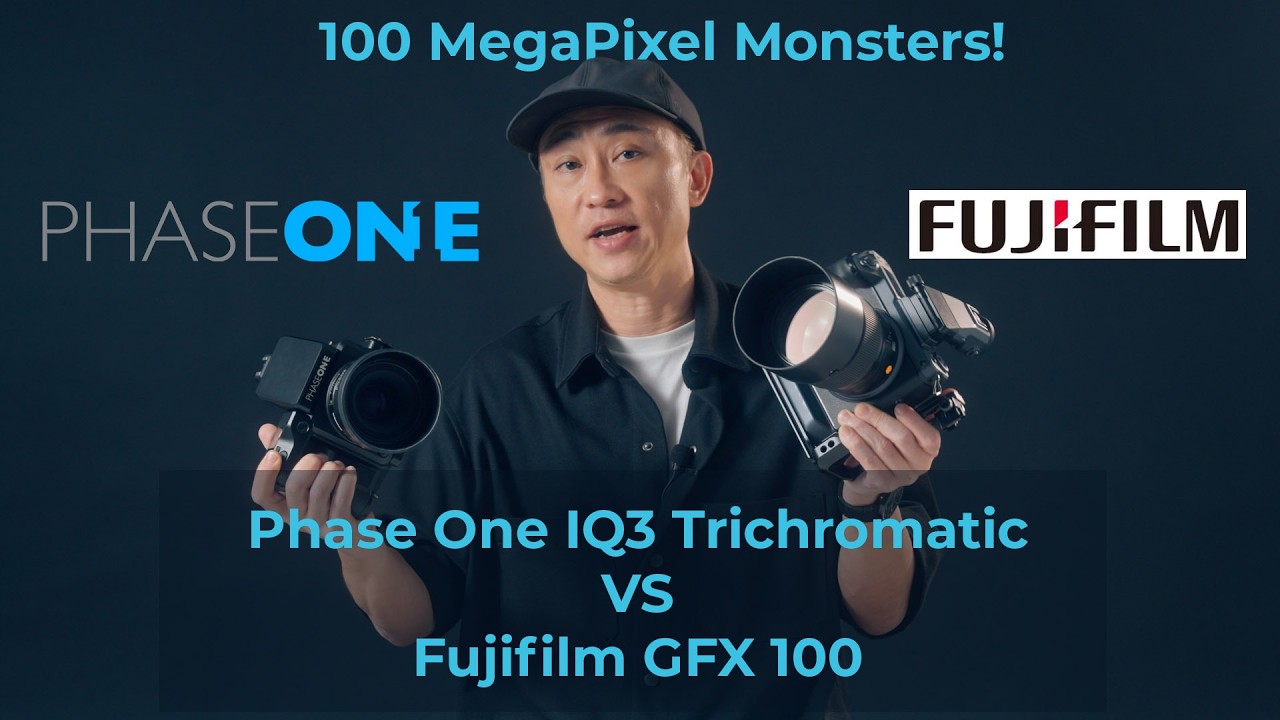
The Clash of Medium Format Giants In the specialized arena of high-resolution digital imaging, the 100-...
The Clash of Medium Format Giants
In the specialized arena of high-resolution digital imaging, the 100-megapixel threshold represents a pinnacle of detail and professional capability. Two systems often dominate this conversation: the
Phase One IQ3 Trichromatic and the
Fujifilm GFX 100.
While both share a similar pixel count, they are fundamentally different machines designed for distinct photographic workflows. The Phase One, originally launched as a premium benchmark, emphasizes color accuracy and sensor size, while the Fujifilm GFX 100 represents a modern shift toward versatility and accessibility.
3/02/2026
In the rapidly evolving landscape of digital imaging, the “baseline” model often carries the heaviest burden — balancing professional...
In the rapidly evolving landscape of digital imaging, the “baseline” model often carries the heaviest burden — balancing professional-grade features with accessible ergonomics, serving as a jack-of-all-trades without becoming a master of none. The Sony A7 V arrives four years after its predecessor into a market filled with high expectations and fierce competition. Early impressions labeled it a conservative update. A deeper look reveals something far more interesting.
8/26/2025
The Hasselblad X2D 100C Mark II is not just an update; it’s a statement. This latest medium format camera from Hasselblad represents a sign...
The Hasselblad X2D 100C Mark II is not just an update; it’s a statement. This latest medium format camera from Hasselblad represents a significant leap forward in a category often defined by deliberate, slow-paced shooting. With a focus on refining performance and pushing technological boundaries, the X2D Mark II delivers a powerful blend of classic craftsmanship and modern innovation.
6/30/2025
Buying a camera in today's fast-evolving market can feel overwhelming, with countless options and new features constantly emerging. This...
Buying a camera in today's fast-evolving market can feel overwhelming, with countless options and new features constantly emerging. This video, drawing insights from photography expert Jason Vong, will demystify the process, helping beginners and enthusiasts alike choose the perfect camera to fit their needs.
5/13/2025
Panasonic has expanded its full-frame mirrorless lineup with two new models: the Lumix S1 Mark II and the S1 Mark IIE. Released soon after t...
Panasonic has expanded its full-frame mirrorless lineup with two new models: the Lumix S1 Mark II and the S1 Mark IIE. Released soon after the Lumix S1R Mark II, these new entries represent a strategic evolution in Panasonic’s camera offerings. While the S1R II—with its 40MP sensor—leans slightly toward still photography, the Lumix S1 II is unmistakably aimed at videographers and hybrid shooters prioritizing advanced video functionality. In fact, some reviewers suggest it could be seen as the spiritual successor to the S1H, despite not carrying the “H” designation.
4/16/2025
The Viltrox 35mm f1.2 LAB lens presents a compelling alternative to premium options like the Sigma 35mm f1.2 and Sony G Master. Offering ...
The
Viltrox 35mm f1.2 LAB lens presents a compelling alternative to premium options like the Sigma 35mm f1.2 and Sony G Master. Offering a fast f1.2 aperture, excellent build quality, and innovative digital features, it has drawn attention from both photographers and videographers looking for performance without the premium price tag.
2/28/2025
Matthew Ruderman had always heard about the incredible colors of the Nikon D700, often regarded as the pinnacle of DSLR color science. Curio...
Matthew Ruderman had always heard about the incredible colors of the Nikon D700, often regarded as the pinnacle of DSLR color science. Curious to see if the hype was justified, he recently picked one up. Around the same time, he also came across a very affordable Nikon D3, a camera that shares the same sensor as the D700. Rather than reviewing just one of these legendary cameras, he decided to compare them both and explore how different they really are.
2/26/2025
Imagine capturing a fleeting moment with such detail and speed that you can practically relive it frame by frame. Or recording breathtaking ...
Imagine capturing a fleeting moment with such detail and speed that you can practically relive it frame by frame. Or recording breathtaking 8K video that rivals the clarity of a Hollywood production. The Panasonic Lumix S1RII promises to deliver precisely that, and at a price point that makes high-end full-frame mirrorless photography more accessible than ever.
1/29/2025
The Hasselblad H6D-100c is one of the most powerful and unique cameras ever created. Designed for professional photographers and cinematog...
The Hasselblad H6D-100c is one of the most powerful and unique cameras ever created. Designed for professional photographers and cinematographers, it offers unparalleled image quality, dynamic range, and modular capabilities. This video explores the technical aspects, benefits, and drawbacks of this remarkable camera.
1/05/2025
The technology is continuously advancing, it is easy to overlook older devices that once inspired a generation of creators. In this video, K...
The technology is continuously advancing, it is easy to overlook older devices that once inspired a generation of creators. In this video, Kofi Yeboah explores the
Fuji GFX 50r, a 7-year-old medium format camera, and why it remains a compelling choice for photography enthusiasts in 2025.
12/28/2024
In 2008, Canon unveiled the 5D Mark II , a camera that reshaped the boundaries of photography and filmmaking. The first DSLR capable of reco...
In 2008, Canon unveiled the
5D Mark II, a camera that reshaped the boundaries of photography and filmmaking. The first DSLR capable of recording 1080p HD video, it bridged the gap between professional and independent creators, opening the door to cinematic visuals on a budget. This video explores its historical significance, technological advancements, and enduring legacy.
12/17/2024
The Hasselblad X2D and 907X are two remarkable cameras that showcase Hasselblad's prowess in the medium format camera market. Despite ...
The Hasselblad X2D and 907X are two remarkable cameras that showcase Hasselblad's prowess in the medium format camera market. Despite sharing the same cutting-edge 100-megapixel sensor, these cameras differ significantly in their design, features, and intended use cases. This video explores these differences and similarities to help photographers choose the best option for their needs.
11/20/2024
The Sony Alpha 1 series has set a high bar for mirrorless cameras, renowned for its blistering speed, exceptional image quality, and profes...
The
Sony Alpha 1 series has set a high bar for mirrorless cameras, renowned for its blistering speed, exceptional image quality, and professional features. With the recent release of the
Alpha 1 Mark II, Sony aims to further solidify its position at the top.
11/12/2024
In a world saturated with ultra-high-resolution lenses, the Samyang Remaster Slim lens kit offers a refreshing departure. It marries the nos...
In a world saturated with ultra-high-resolution lenses, the Samyang Remaster Slim lens kit offers a refreshing departure. It marries the nostalgic allure of retro photography with the convenience of modern digital cameras, providing a fun and creative experience for photographers. This article delves into the features, benefits, and artistic potential of this unique lens kit.
11/10/2024
Is it surprising that the Nikon D700 , released in 2008, remains a compelling choice even in 2024? With it's rugged build and distinct...
Is it surprising that the Nikon D700, released in 2008, remains a compelling choice even in 2024? With it's rugged build and distinctive colour output it continues to impress. Jakub takes a deep-dive into why this legendary full-frame DSLR has truly stood the test of time.
11/07/2024
Testing out the new Hasselblad XCD 75P portrait lens, Mark McGee takes 25 moody portraits in a 12 mins behind the scenes video. Walking a...
Testing out the new Hasselblad XCD 75P portrait lens, Mark McGee takes 25 moody portraits in a 12 mins behind the scenes video. Walking around north London, he does street photography portraits, environmental portraits and studio portraits using flash photography.
11/03/2024
Is the Godox AD100 brighter than the Godox AD300? Wow! Shocking results. Modifiers make all the difference. Once and for all MarkusPix te...
Is the Godox AD100 brighter than the Godox AD300? Wow! Shocking results. Modifiers make all the difference. Once and for all MarkusPix tests the Godox AD100, AD200, AD300, AD600 and compares them with Profoto B10X and B10X Plus. You'll be surprised and amazed! If you do wedding photography or outdoor or studio off camera flash photography- here are the tube shaped flashes compared for power, brightness, size, weight and price. Enjoy!
10/24/2024
Choosing between the iPhone 16 Pro and the Sony a6700 can be tough. Both are fantastic cameras, but they're designed for different peop...
Choosing between the iPhone 16 Pro and the Sony a6700 can be tough. Both are fantastic cameras, but they're designed for different people. This article breaks down their pros and cons to help you pick the perfect one for your needs.
10/06/2024
This is the only digital medium format camera you can consistently buy for under $1,000 - but, is it any good? The Hasselblad H3D was rele...
This is the only digital medium format camera you can consistently buy for under $1,000 - but, is it any good? The
Hasselblad H3D was released in 2006 for $38,000 (numbers vary on sources, but that's the most consistent one I've found). It is a fully modular digital medium format camera, including swappable sensors and viewfinders. James is using the H3D 39mp CCD sensor back, but you can also shoot with a film back (if you want to pay a shocking $1,000+ for it used today!)








SOCIAL MEDIA