


The Last DSLR: Why Nikon's D780 Still Matters in a Mirrorless World
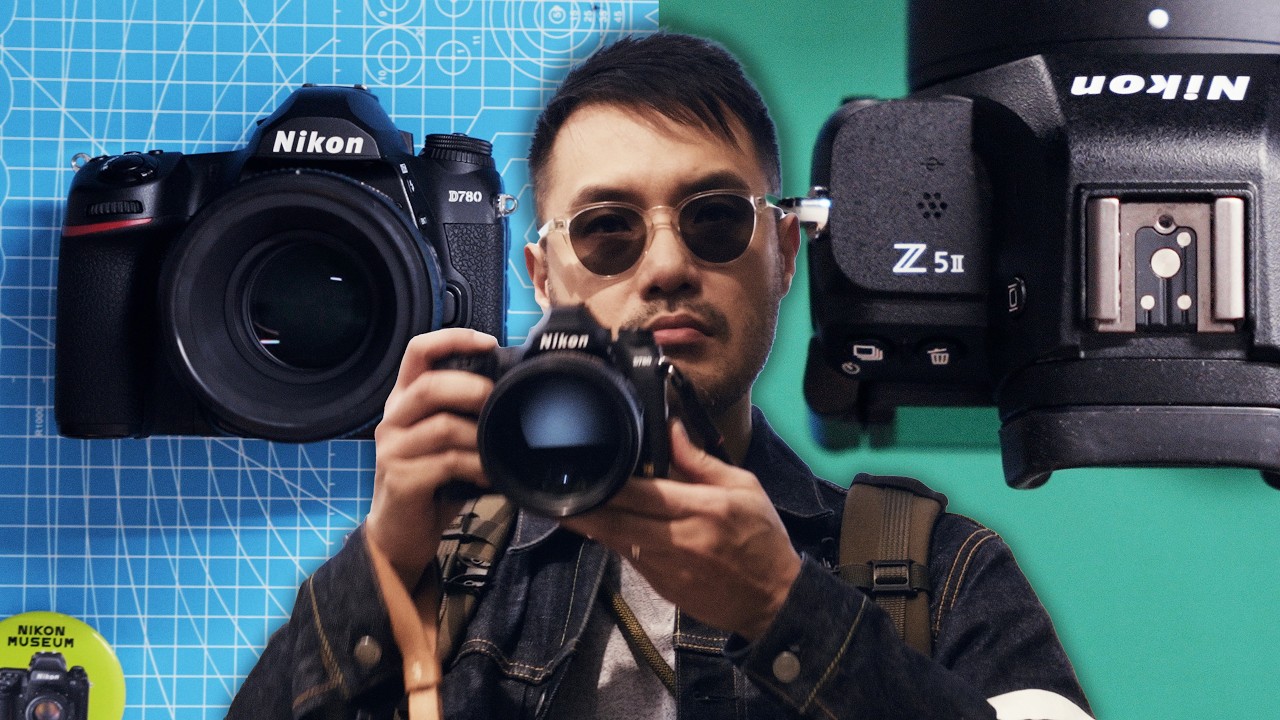
In an era dominated by modern mirrorless developments, Nikon’s D780 stands as a quiet reminder of DSLR mechanics. Larger, heavier, and often more expensive than entry-level mirrorless options like the Z52, the D780 presents a unique puzzle for creators deciding between established optical viewfinders and digital features.
The primary appeal of the last DSLR lies in its seamless access to classic F-mount glass.
Lenses such as the 58mm f/1.4G offer a gradual fall-off and unique rendering that modern Z-mount equivalents have yet to fully replicate. On a DSLR body, these lenses balance naturally without the front-heavy shift introduced by FTZ mount adapters.
While modern electronic viewfinders make overexposure nearly impossible, the tactile feel of an optical viewfinder offers a grounded shooting experience for photographers who appreciate analog rhythms.
Unique Focal Lengths and Character
Beyond everyday prime lenses, specialized optics like the 105mm f/1.4E and 28mm f/1.4E bring distinct character to portrait and environmental work. The 105mm f/1.4 provides dreamy background compression and flattering subject separation without requiring a macro configuration.
Similarly, a fast 28mm f/1.4 remains a rare offering in contemporary lineups, delivering low-light flexibility and wide-angle depth without excessive perspective distortion.
Ergonomics vs. Modern Features
The D780 excels in battery longevity, deep ergonomics, and backward compatibility with vintage screw-drive AF-D lenses. However, mirrorless systems counter with in-body image stabilization (IBIS), real-time exposure previews, and highly reliable tracking autofocus through glass or foliage.
For creators seeking modern convenience, mirrorless remains the practical default. Yet for collectors and character-driven shooters, the last DSLR provides a direct connection to classic optical designs.
Key Takeaway: Choose the mirrorless path for lightweight convenience, IBIS, and precise tracking autofocus. Stick with a high-end DSLR if your workflow relies heavily on the physical handling, battery endurance, and smooth fall-off rendering of legendary F-mount primes.
Video and images via Bokeh Therapy with Jack Wang





0 comments:
Post a Comment