


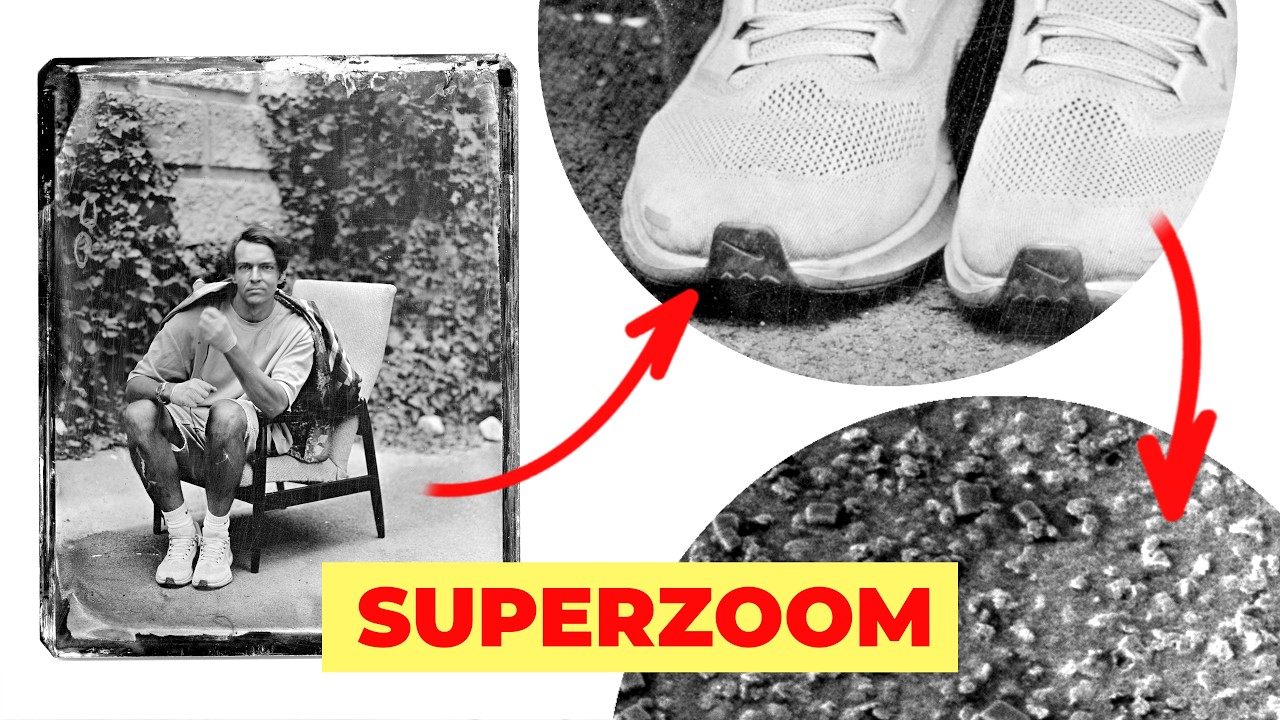
Why 19th Century Photographs are SUPER DETAILED
Modern studios depend heavily on manipulating the key light and fill light to establish precise lighting ratios.
The Anatomy of Analog Resolution
However, early photographic pioneers relied strictly on raw chemistry, physics, and the sun's natural illumination.
The wet plate collodion process captures millions of sub-micron silver particles, yielding a resolving power that challenges contemporary digital sensors.
A rudimentary pinhole camera strips away complex optics, offering infinite depth of field without adjusting a mechanical aperture.
Conversely, leveraging large format lenses produces a dramatic optical separation, isolating subjects within a delicate, painterly bokeh.
Pro Tip: Analyzing these archival plates under an electron microscope reveals that physical film grain holds unparalleled depth, utilizing secondary and backscattered electrons to show completely different structural information.
This microscopic terrain of metallic silver demonstrates that historical analog techniques remain an absolute marvel of optical and chemical mastery.
Video via Microscopy Specialist





0 comments:
Post a Comment