


Separating Your Subject: A Guide to Professional Hair Lighting
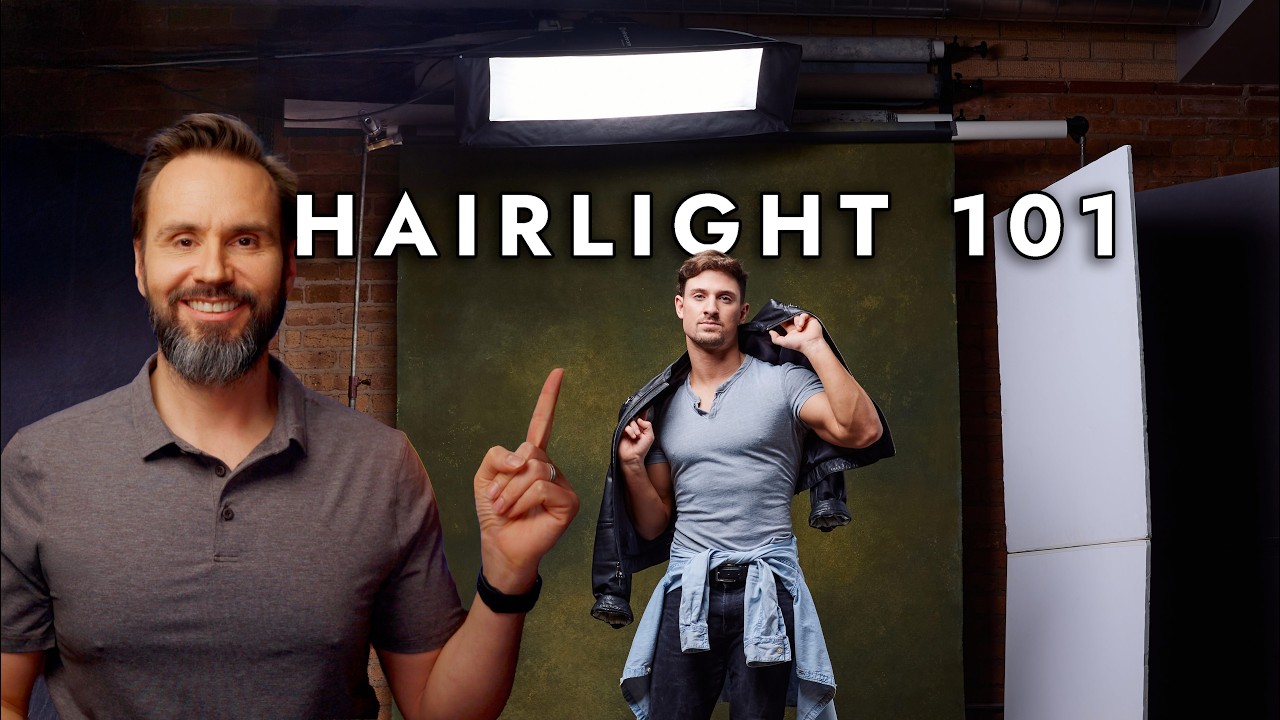
Mastering portrait lighting often involves a delicate balance between visibility and subtlety. One of the most effective ways to elevate a studio portrait from "standard" to "professional" is the implementation of a hair light.
This specialized lighting technique serves to separate the subject from the background, preserve intricate details in dark hair, and add a three-dimensional depth that a single light source simply cannot achieve.
By understanding how power levels, placement, and modifier choices interact, any photographer can refine their craft and produce more polished, high-end imagery.
The Strategy of Placement and Power

When it comes to power, the goal is often a subtle "window light" look. A general rule of thumb is to adjust the intensity based on the subject's hair color: black hair requires more power (about one stop below the main light), while blonde hair needs significantly less (two to three stops below) to avoid "blowing out" the highlights.
Choosing the Right Modifier

Conversely, a large umbrella provides a broad, soft light but can be difficult to control, often spilling onto the subject's face or the backdrop. For most professional portraits, a strip softbox is the ideal tool. Its narrow shape allows for precise "painting" of light onto the hair and shoulders without distracting from the main key light.
Using a grid with the softbox can further refine the beam, ensuring the light goes exactly where it is intended and nowhere else.




0 comments:
Post a Comment