


The Art of Refraction: Transforming Light and Water
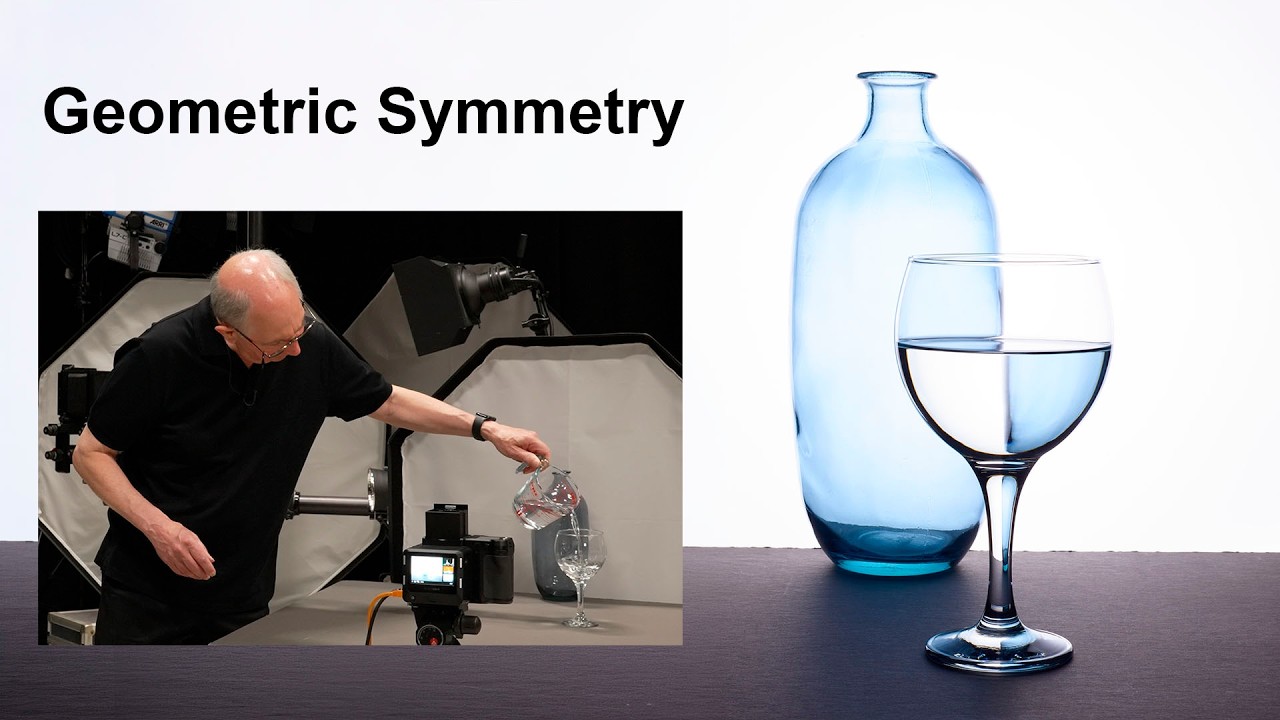
Is it possible to create a complex geometric pattern out of nothing but air, water, and glass? The answer lies in the physics of refraction. In this new tutorial, we break down the creative process behind minimalist photography that uses light distortion as its protagonist.
Success relies on control. Using a neutral base and a strategic combination of a vase and a water-filled glass, we seek the perfect symmetry where light passes through the liquid, inverting the image and creating unique graphic shapes. An octagonal softbox is essential to wrap the subjects in soft, even illumination.
Through precise adjustments in depth of field—stopping down to f/22—and meticulous management of the distance between the light source and the objects, we achieve the dramatic contrast that elevates the image. Dive into this technical experiment and discover how to simplify your visual narrative to achieve extraordinary results.
Mastering Depth of Field
To keep both the background object and the refractive element in the foreground in sharp focus, it is necessary to sacrifice luminosity in favor of a closed aperture [00:10:10]. Compensating for this light loss by adjusting the flash power is the final step to ensure the image geometry remains sharp and balanced.
Photographer's Note: Do not fear experimenting with white balance in post-production. Although shooting in RAW allows you to correct the natural blue tint of the water, often, retaining a slight chromatic saturation adds an artistic character that a pure technical correction might eliminate
Video and details via Camera Club Live





0 comments:
Post a Comment