


The Pro Method: Guaranteed Perfect Exposure with Studio Flash
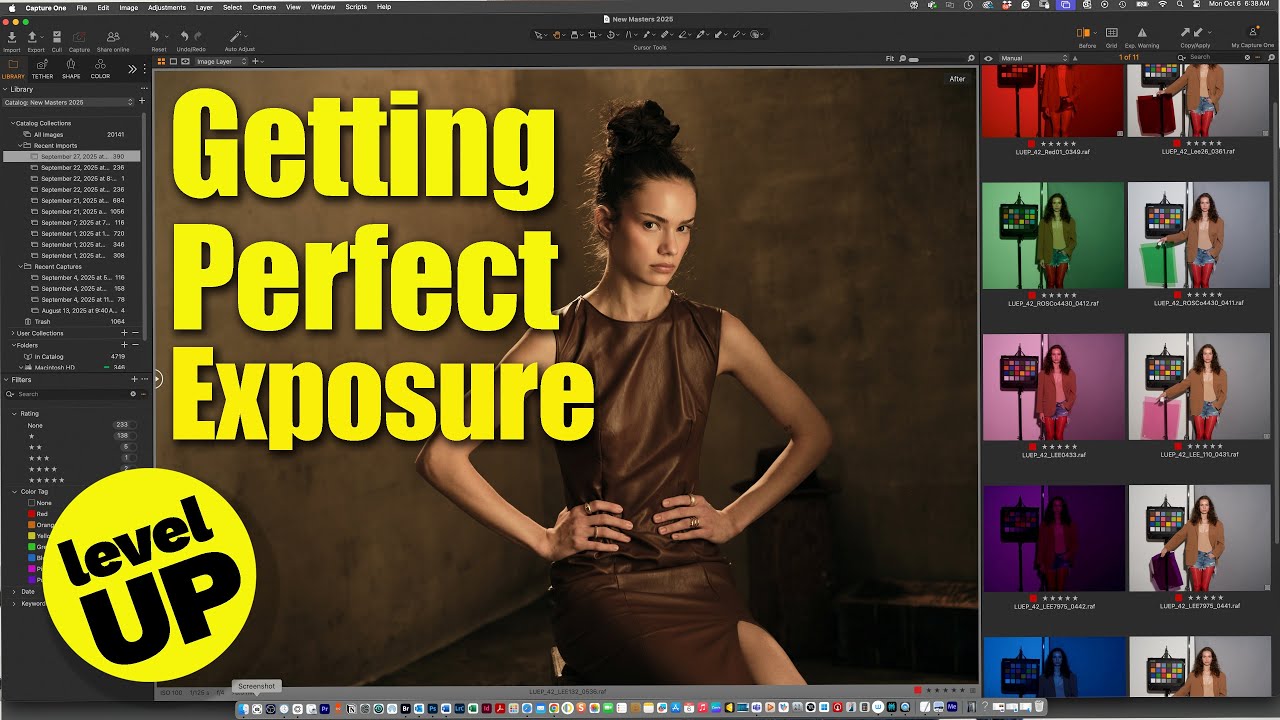
Mastering perfect exposure is the bedrock of professional photography. Consistency saves time in post-production and instills client confidence on set. Achieving technical accuracy is not about stifling creativity; it is about establishing a foundational baseline from which informed artistic decisions can be made.
This video distills the necessary knowledge to move beyond guesswork, covering three key exposure methods and the complexities of working with color gels and multi-light setups.
The Technical Baseline: The 18% Gray Standard
For digital cameras using standard color profiles (sRGB or Adobe RGB), technical accuracy is defined by how the 18% gray patch—simulating mid-tone reflectivity—renders in the final file.
In an 8-bit scale, this reference patch should register an RGB value between 117 and 119. Establishing this numerical target with a color checker is the first step toward repeatable, correct exposure.
The Three Paths to Consistent Exposure
1. The Guessing Method (Test and Adjust):
This iterative process involves starting at a base setting (e.g., ISO 100, f/11, 1/125s) and adjusting flash power until the result looks correct.
To make this method scientific, shooting tethered is crucial. Use the software's color picker tool to check the 18% gray value and precisely gauge how much power adjustment is needed.
2. The Light Meter (The Professional’s Choice):
The incident light meter measures light falling onto the subject before the shutter is pressed, eliminating ambient and background variables.
For absolute precision, photographers must account for the difference between a lens’s theoretical F-stop and its measured light transmission, the T-stop. Lenses rated at F/2.8 may transmit light equivalent to a T/3.5.
Actionable Tip: Check your 18% gray patch and set the necessary exposure compensation on your meter to match your specific lens.
3. TTL Metering (Fast, But Flawed):
TTL (Through-The-Lens) metering is ideal for dynamic event environments where speed is paramount. However, since it's designed to average the scene to 18% gray, it is easily tricked by extreme tones.
A subject against a pure white background will often be underexposed, while a subject wearing black on a black background may be overexposed. While convenient, the automated system sacrifices precision and repeatability.





0 comments:
Post a Comment