


Beauty Dish vs Parabolic Reflector: Which Modifier is Best for Portrait Photography?
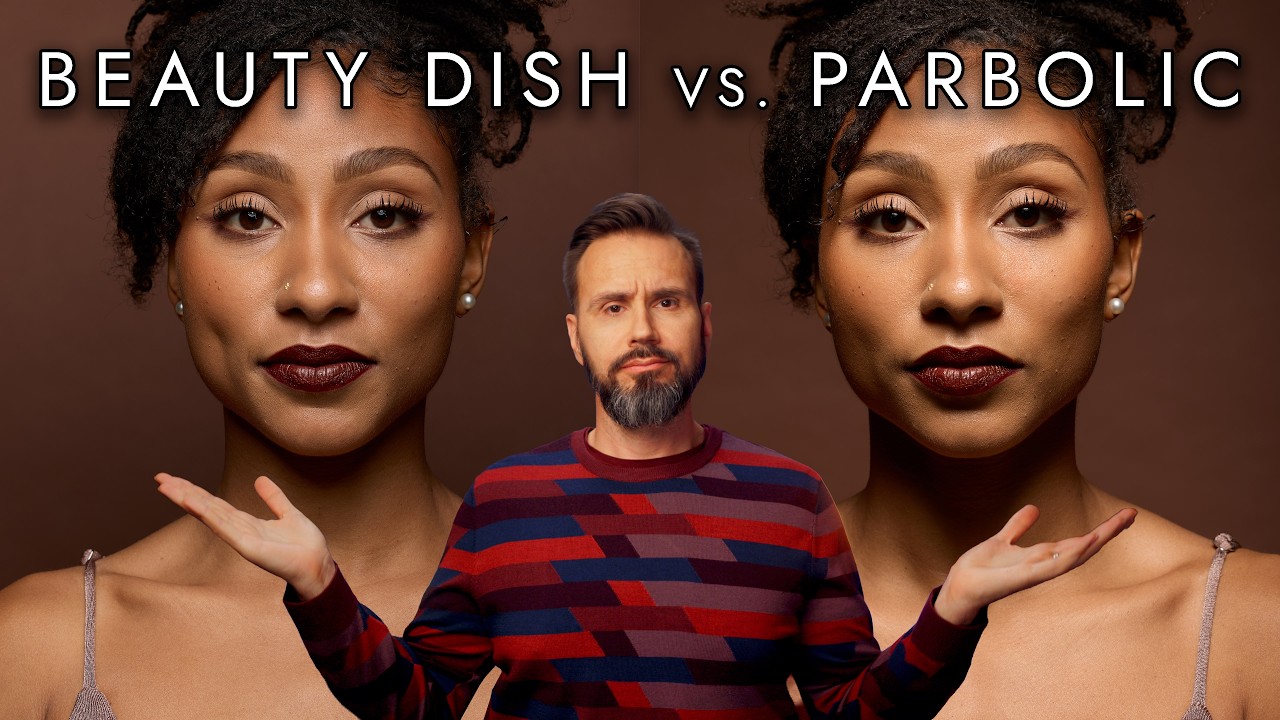
These modifiers are the architects of contrast, capable of transforming a flat portrait into a three-dimensional study of geometry and skin detail.
The beauty dish remains the quintessential choice for fashion, prized for its ability to deliver punchy highlights while maintaining a controlled fall-off.
Conversely, the focusable parabolic reflector introduces a level of versatility that is almost cinematic. By shifting the light source along its internal axis, a photographer can move from a concentrated, dramatic "spot" to a broad, sculpted "flood."
Dimensionality and Sculptural Light
Conversely, the focusable parabolic reflector introduces a level of versatility that is almost cinematic. By shifting the light source along its internal axis, a photographer can move from a concentrated, dramatic "spot" to a broad, sculpted "flood."
This adjustment significantly impacts the depth of field perception and the way bokeh renders in the background when shooting at wider apertures.
Understanding the technical divergence between these two tools—specifically how they manage specularity and contouring—is essential for any artist looking to master the interplay of light and bone structure.
Whether aiming for the chiseled look of an athlete or the ethereal glow of high-end beauty, the modifier dictates the narrative.
Quick Technical Insights:
• Light Direction: Parabolic reflectors offer more "collimated" light, leading to sharper shadows and higher dimensionality.• Shadow Edge Transfer: Beauty dishes provide a unique "snap" in the transition from highlight to shadow.
• Modifier Positioning: Distance plays a critical role in how these modifiers "wrap" around the subject's face.
Video and images via John Gress





0 comments:
Post a Comment