


Mastering Visual Continuity: How Back to the Future Uses Perfect Blocking to Tell the Story
Mastering Visual Continuity: The Kinetic Art of Back to the Future
Cinematic storytelling is often judged by the strength of its dialogue or the complexity of its plot, but the true magic of Back to the Future lies in its masterful visual construction. Director Robert Zemeckis and cinematographer Dean Cundey utilized advanced techniques in blocking and staging to transform a high-concept script into a masterpiece of continuous motion.
By prioritizing flowing camera work over a series of rapid cuts, they created a sense of presence that allows the audience to feel as though they are standing right beside the characters. This approach relies heavily on maximizing the information within a single frame through layered compositions and strategic movement.
The Power of the Z-Axis and Multi-Layered Shots
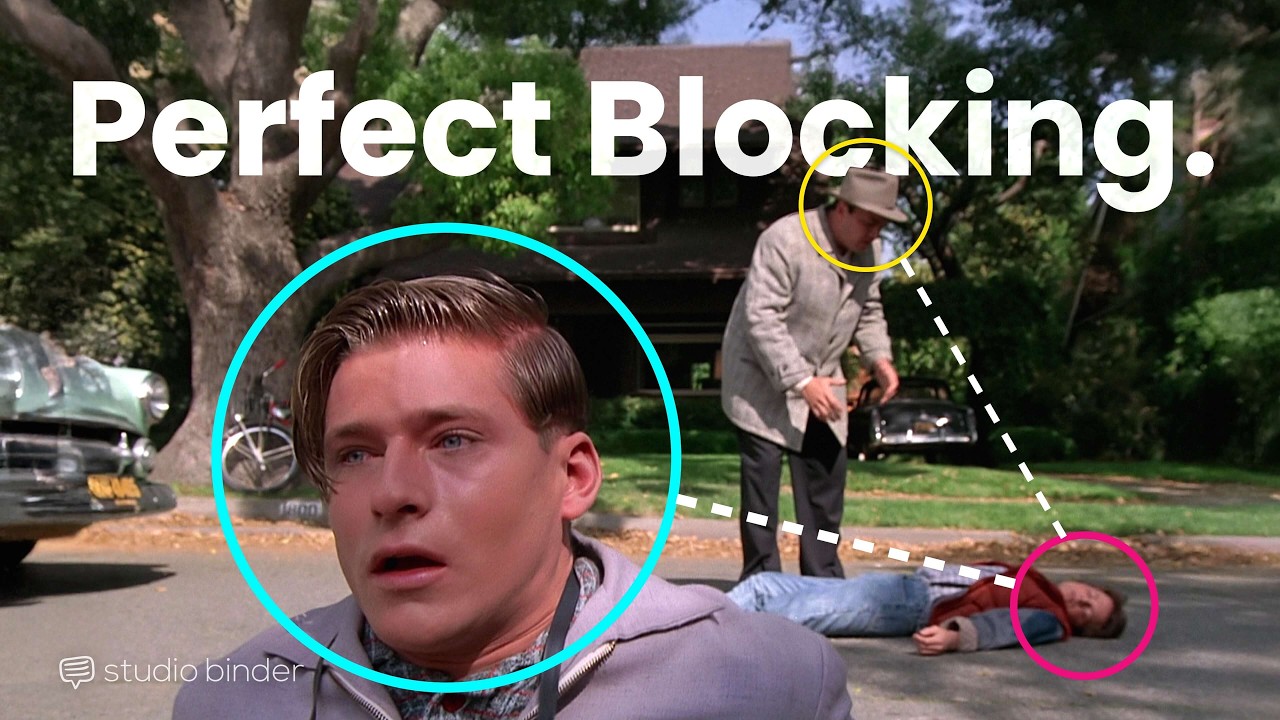
One of the most effective strategies used in the film is blocking along the Z-axis. Instead of moving characters only side-to-side (X-axis) or up-and-down (Y-axis), Zemeckis frequently moves subjects toward and away from the lens. This depth creates a three-dimensional feel that eliminates the need for constant cutting to coverage shots.


A single 50-second take can encompass what would traditionally be four or five separate shots. By layering the foreground, middle ground, and background with story-critical elements—such as a character in the foreground and a plot-driving prop in the distance—the frame remains visually active and narratively dense without feeling cluttered.
To manage these long, complex takes, the filmmakers employed eye trace—a technique that uses movement or color to guide the viewer’s focus exactly where it needs to be.
Guiding the Eye with Eye Trace and Motivation
To manage these long, complex takes, the filmmakers employed eye trace—a technique that uses movement or color to guide the viewer’s focus exactly where it needs to be.

Whether it is a bright yellow car pulling our gaze across the screen or a character’s sudden turn, every movement is purposeful.

Crucially, this blocking is always motivated. Characters don't just move for the sake of the camera; their physical shifts represent their internal thought processes.
• Layer Your Frames: Place important story elements in the foreground, middle, and background simultaneously to maximize narrative efficiency.
• Practice Eye Trace: Use a moving object or a specific color to lead the viewer’s eye to the next important piece of information in a long take.
• Motivate Every Movement: Ensure that every time a character moves, it reflects their emotional state or a shift in the conversation.
Images and video via StudioBinder
Actionable Tips for Dynamic Visual Storytelling:
• Utilize Depth: Move your subjects through the Z-axis (towards or away from the camera) to create natural transitions without editing.• Layer Your Frames: Place important story elements in the foreground, middle, and background simultaneously to maximize narrative efficiency.
• Practice Eye Trace: Use a moving object or a specific color to lead the viewer’s eye to the next important piece of information in a long take.
• Motivate Every Movement: Ensure that every time a character moves, it reflects their emotional state or a shift in the conversation.
Project Resume
The Concept
Analyzing the visual mastery of Robert Zemeckis' "Back to the Future."
Core Techniques
Blocking along the Z-axis, layered compositions, and motivated staging.
Key Objective
Create visual continuity and engagement through flowing camera work.
Visual Guiding
Using eye trace to direct audience focus within complex, long-duration shots.
Images and video via StudioBinder




0 comments:
Post a Comment